
Now I will start this by saying that I think everyone should let their yards go wild. I am a huge rewilding enthusiast – I think you should garden for wildlife and pretty much only that – unless you’re also growing food. Anything else, although pretty, is a waste of resources. That said, what I find absolutely abhorrent is this trend of replacing your lawn with plastic grass. Nothing says you hate the planet and all living creatures more than plastic grass – okay maybe dumping pesticides is worse, but barely.

Let’s list some of the problems of plastic grass…
- Real grass helps to cool the planet – plastic turf does not. It gets really hot – like burning your dog’s paws hot. And, before you say what about concrete – that’s bad too – but at least you’re not being a hypocrite and pretending to have a lawn.
- The plastic in plastic grass breaks down into microplastics over time – and that’s bad. Small animals and insects eat the microplastics and die.
- Drainage issues – yes – some fake turf is permeable allowing for water to seep through, but if it’s not installed correctly it can lead to standing water which leads to mold and mildew and birds will use it as a birdbath – coating themselves in chemical residue.
- There is absolutely nothing in plastic grass that is helpful to insects – which we need to help pollinate other plants – you know – our oxygen engines and our food.
- As well as microplastics, it’s made of chemicals that can leach into the soil from the sun and the rain – which concrete does not by the way.
- It still requires maintenance – you may not need to mow but you will need to vacuum and still clean bits of actual nature from it.
- Plastic grass degrades the soil underneath – It restricts access to natural materials like leaf litter and grass clippings – essential for feeding soil organisms like worms and microscopic animals and keeping the soil healthy.
- It displaces actual living plants that can absorb CO2.
- During the process of being manufactured, transported, and installed, fake turf leaves a significant carbon footprint.
- Artificial turf is ugly and doesn’t look natural because it isn’t.
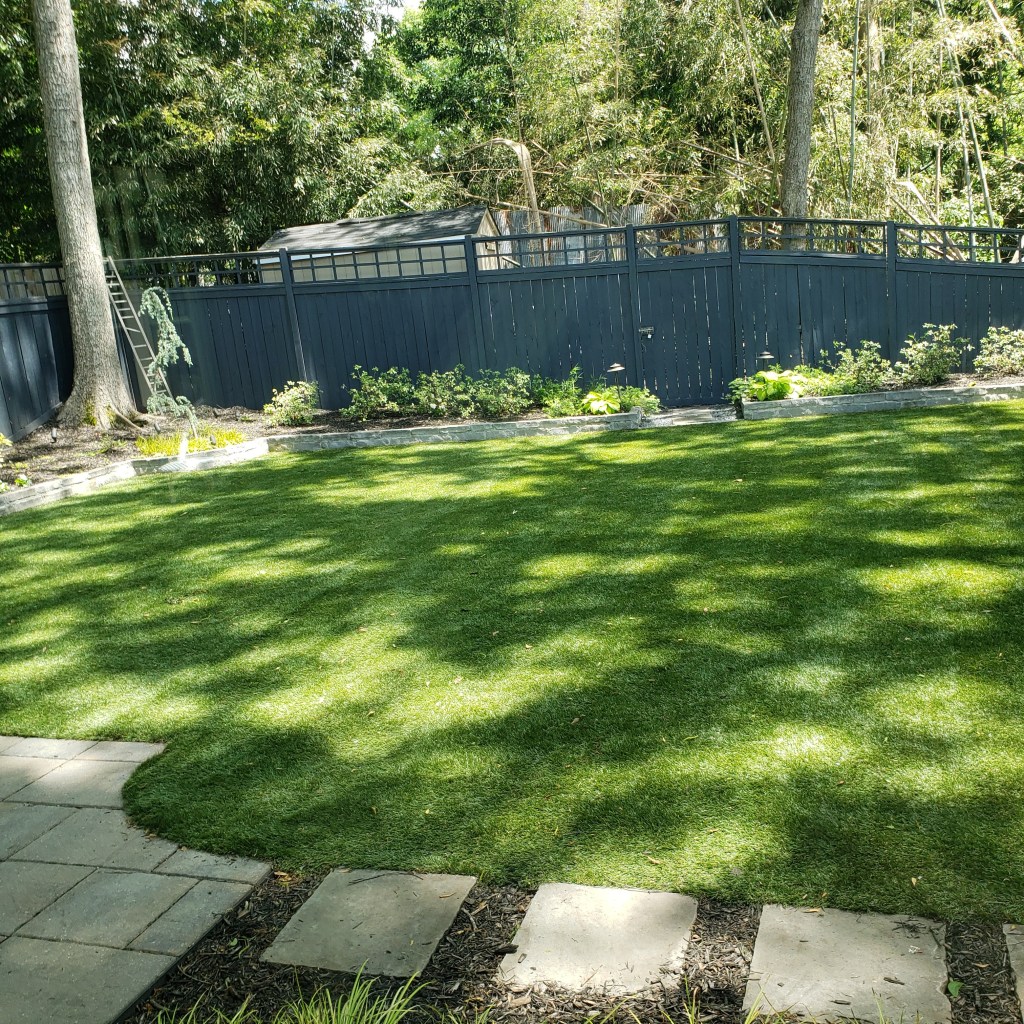
In researching for this post, I noticed so many companies touting fake grass as eco-friendly. Just to reiterate the point – in NO way is adding plastic anything to your landscape eco-friendly. Now, I’m not going to wax poetic about grass lawns(unless you live in an area of native grass prairie) because I think grass lawns are not the best choice for most wildlife, but a grass lawn is a million times better than a plastic one.
Better Options to Artificial Turf
Mulch – Use natural mulch like from a tree company – not the artificially chemical dyed stuff. If you use mulch from a tree company – make sure they let you know what’s in it. You don’t want to find out later that it’s full of ground up English ivy.
Pebbles or River rock – at least the water can drain down and there is no leaching of chemicals or microplastics involved.
Try a Jute Rug – Are Jute Rugs Eco-Friendly? 14 Important Questions Answered
Plant native shade tolerant plants – here are some helpful links for the US. This is a very broad list so as always, double-check with your local native plant society to see if something is invasive to your area or not – or just search engine it.
Northeast – PLANT NATIVE GROUND COVERS & MAKE AMERICA GREEN AGAIN
Southeast – 20 Easy Shade-Tolerant Native Southern Groundcovers
Midwest – Top 7 Michigan Native Plants For Ground Cover
Southwest – 10 Native Ground Covers for Southwestern Landscapes,
Northwest – Native plants for deep shade
Plant a moss lawn – it’s soft and great for insects and drainage. How to Grow a Moss Lawn: Benefits, Disadvantages & Tips
If you know or have used other alternatives to fake grass, please let us know your experiences in the comments below. Thanks for stopping by and reading my rant about fake plastic grass. Hope you have a pleasant rest of your day!


 Green Is A Lifestyle
Leave a comment