
Are you ready to transform your yard into a vibrant and eco-friendly oasis that helps local pollinators and celebrates the beauty of native plants? Well, you’re in luck! There are plenty of native ground covers that are not only gorgeous but also beneficial to the local ecosystem. Say goodbye to your high-maintenance grass lawn and hello to these 6 native ground covers that are perfect for replacing your grass lawn in the Southeast United States!

Chamomile lawns are a low-maintenance favorite that grows well in most of the U.S., needing no mowing and only minimal water. As a member of the daisy family (Asteraceae), chamomile is a delicate, low-growing perennial ground cover with beautiful white-petaled flowers and bright yellow centers. Besides its ornamental value, chamomile is also known for its medicinal uses and is often found in beauty products. It’s a hit with honey bees and can even help keep mosquitoes at bay.

Creeping Phlox, or Phlox stolonifera, is a perennial herbaceous plant native to the eastern United States. It thrives in woodlands and along stream banks in the vicinity of the Appalachian Mountains, from Pennsylvania south to northern Georgia. It typically blooms in spring, with purple-pink flowers being the most common and can thrive in various sun conditions. Creeping phlox grows up to 8 inches tall and can spread up to 2 feet wide, making it a lovely and practical groundcover option.

Pachysandra procumbens, the Allegheny pachysandra or Allegheny spurge, is a flowering plant in the family Buxaceae, native to the southeast United States from West Virginia and Kentucky south to Florida, and west to Louisiana. This plant spreads by rhizomes and is easy to propagate by division. Blooming in early spring with white fragrant flowers. Mountain Spurge is an excellent ground cover for shady areas. It is considered more attractive than the over-used, Asiatic Pachysandra terminalis. The native species grows slowly and will not take over like P. terminalis.

Wild ginger(Asarum canadense) is found throughout the eastern half of the United States and is ideal for moist shade gardens. It features funnel-shaped leaves and a dense growth habit, spreading easily by rhizomes in favorable conditions. For optimal growth, plant wild ginger in well-drained, rich soil; heavy clay soil may shorten its lifespan. In spring, you’ll be treated to inconspicuous reddish flowers that bloom beneath the foliage, adding to its allure.
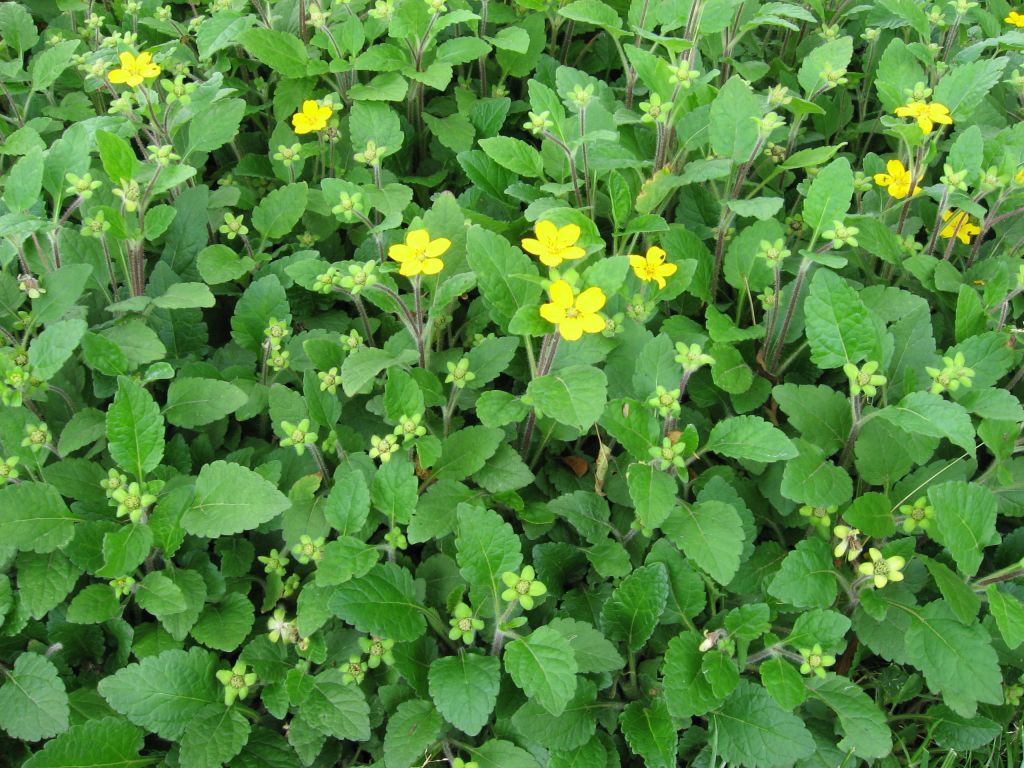
Green & gold (Chrysogonum virginianum) is a lovely low-growing perennial native to the Eastern US. You can spot it along dry woodland edges and forest clearings, stretching from Ohio to Georgia, and westward to Louisiana.

And, the last one on the list, our Common Violet (Viola sororia) is a very aggressive spreader, but it supports a wide range of native pollinators. It thrives in a wide range of habitats, from forests to open areas, and is a particularly common sight in lawns and fields. Although commercial growers don’t often tout it as a groundcover, the common violet offers plenty of charms. Most people view it as an ordinary weed, but it adds value to your garden by attracting wildlife, sporting lovely foliage, and boasting pretty violet flowers in spring. Plus, it’s free and readily reseeds itself! And let’s not forget, all parts of Viola sororia are edible. I have them in my yard and I try to leave them as much as possible because they’re so cute.
Replacing your grass lawn with one of these native ground covers is a fantastic way to create a more sustainable and eco-friendly yard. Not only will you save time and resources, but you’ll also be supporting the local ecosystem and creating a beautiful and unique landscape that will dazzle your lawn obsessed neighbors.


 Green Is A Lifestyle
Leave a comment